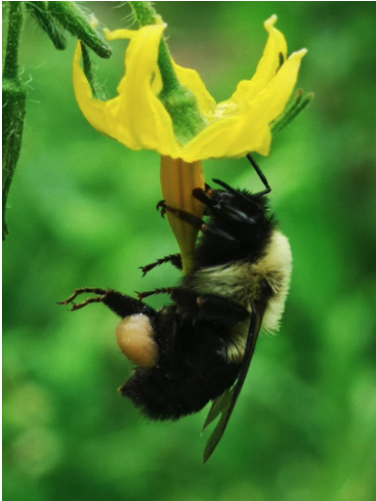
Plant-pollinator interactions are very complex and nearly 75% of flowering plants rely on animals to move pollen to flowers. The color, shape, and smell of flowers partly determine the types of pollinators that visit them. It’s all in the details - in some plants, like those related to the tomato family, there’s a special surprise maneuver to get the pollination job accomplished.
It’s an unusual “anther rupture” trick where the part of a flower that contains the pollen (anther) sheds it through pores at their tips. This process is often associated with buzz pollination by insects, such as bees and bumblebees, which can vibrate their bodies at the required frequency (240–405 Hz) to release the pollen. It is similar to the musical note of “B”. No pun intended and my apologies to fellow Beatle fans out there, but it’s a case of “Shake it up baby…”
This unusual type of anther is called a “poricidal anther” and can help prevent excessive pollen loss by only rewarding pollinators that specialize in buzz pollination. Plants with poricidal anthers often produce little to no nectar, but their pollen is rich in protein - essential to produce strong colonies for honey production, boost bee colonies, bee queen breeding, and more.
And the dance moves! This pollen removal boogie requires bees that land on the flowers, curl around the “anther cone” , and vibrate their indirect flight muscles at high frequency in contact with anthers and thereby induce rapid pollen release. This produces an audible buzzing sound and is a unique form of pollination termed “buzz pollination”.
Buzzing bees are usually active in early morning because anther pollen release of most buzz flowers occurs during this period. The total time of vibration of anthers of a given flower by a buzzing bee is termed the handling time of the bee, and it varies by bee species - some prefer the tempo of a Tango, others the Texas-Two-Step.
Researchers have observed bees selectively visiting more younger pollen-rich flowers than older flowers, spending more time on younger flowers. It’s a supply and demand thing. For example, while the relatives of the tomato (Solanaceae family) lack nectar and restrict access to pollen, they are heavily visited by a large number of bees, so they are very popular. The release of large amounts of pollen during initial vibrations of new flowers decreases the amount of pollen left with older flowers. Like empty store shelves after a Black Friday shopping day.
Timing is everything for another reason as well. The flower part (stigma) that accepts the pollen becomes receptive a day before the flower blooms, but with its own pollen not beginning to shed until later, so cross pollination is favored over self pollination. The stigma remains receptive and the pollen continues to spread as long as the flower is open, depending on weather and other conditions this can vary from a day to a week. Another fun fact about plants to help you “Know Before You Grow”. Isn’t nature fascinating?