Ethno - What? Simply put, ethnobotany is the study of how people and cultures (ethno) interact with plants (botany). The holidays are a great example of how many of us connect with plants (Christmas trees, poinsettias, Christmas cactus, etc..) and join with our family, friends and neighbors in celebration while doing so.
Ethnobotany Is Real Christmas Trees
(Updated: Nov. 7, 2023, 10:02 a.m.)
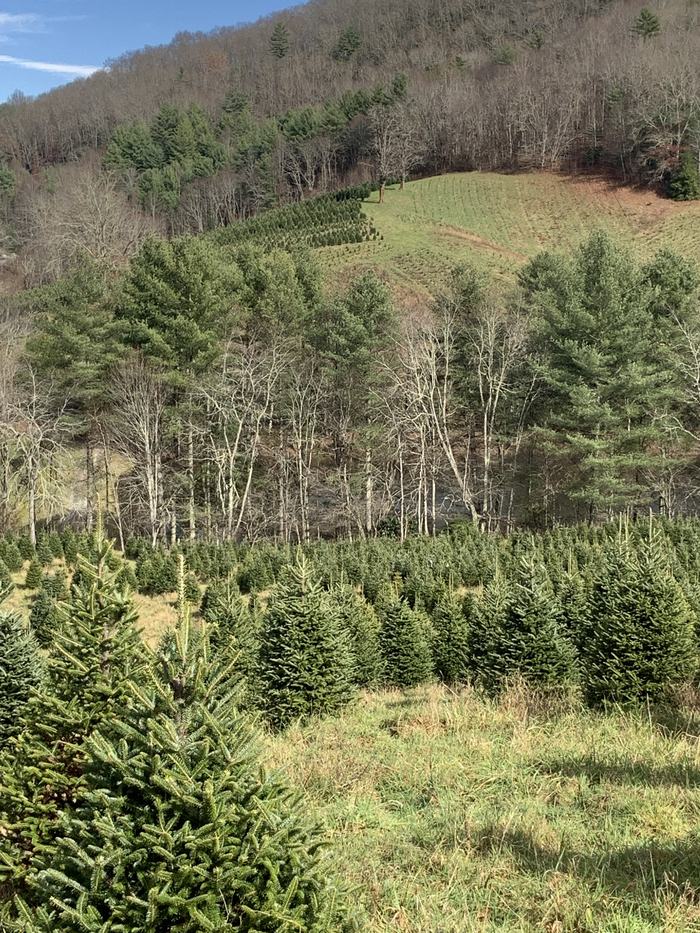
Christmas trees, wreaths and greenery are especially important to our communities in Western NC. In fact, our top 5 Christmas tree producing counties are Ashe, Avery, Alleghany, Watauga, and right here in Jackson County. According to the North Carolina Christmas Tree Association (NCCTA), our state’s Christmas tree industry is ranked number two in the nation for amount harvested and their associated cash receipts. The total comes out to be more than 26% of the real Christmas trees produced in all of the US.
Bringing that fact home, the last USDA Census of Agriculture for Jackson County indicates that cultivated Christmas trees, and short rotation woody crops brought in the largest market value of agricultural products sold in the county.
That is a big deal for our community considering the “Local Multiplier Effect” - the economic ripple effect that occurs within a community when consumers spend their money at independent, locally-owned businesses.
Essentially, when you choose to spend your money with independent, locally owned and operated businesses instead of chain stores or with the online giants, those businesses and employees spend locally it again with purchases of local supplies and services. As your dollars move through your community, the money generates more local wealth, charitable contributions, and jobs. Studies suggest that every dollar spent at independently owned, local businesses contributes three times the jobs, income effects, and tax benefits to the local economy.
Our local Christmas tree growers are good for our community and real Christmas trees are good for the environment, so we benefit from that perspective as well.
Real Christmas trees absorb CO2 and other harmful “greenhouse” gasses and release fresh oxygen into the air. Across the US Christmas trees are absorbing and storing 4200 pounds of Carbon every day. That is the equivalent of taking 300,000 automobiles off the road. One acre of Christmas trees provides the daily oxygen
requirement for 18 people. At last count Jackson county recorded over 2,000 acres of Christmas trees out of about 500,000 acres of Christmas trees in the US, which collectively provide oxygen for 9 million people daily.
Young, fast-growing trees like Christmas trees, which are harvested at about age 10-15 yrs old, release more oxygen than mature forest trees. For every Christmas tree harvested, another one to three trees are planted to ensure a steady supply year after year, so for all our families that want one, there should be a tree available for purchase.
Christmas Tree farms stabilize soil, protect water supplies and provide refuge for wildlife such as turkey, quail, songbirds, rabbits and deer while creating scenic green belts. Often, Christmas trees are grown on land that doesn’t support other crops.
After the harvest, then what? Field cut Christmas trees are an all-American renewable, recyclable resource. They can be used as wind and water barriers at river beds to fight soil erosion, protect our water supplies, and provide refuge for wildlife. They can be chipped into biodegradable mulch to replenish soils.
The Jackson County Solid Waste Department operates a free drop off program for unwanted Christmas trees after the holidays for Jackson County Residents. For more information contact the Transfer Station at 828-586-7577.
You can buy local and support your local 4-H Youth Development program through their Christmas Tree Fundraiser. Call the N.C. Cooperative Extension office at 828-586-4009 or email Freda Childers at flchilde@ncsu.edu for more information.
Join our mailing list!
Enter your email address to receive updates.
Written By